
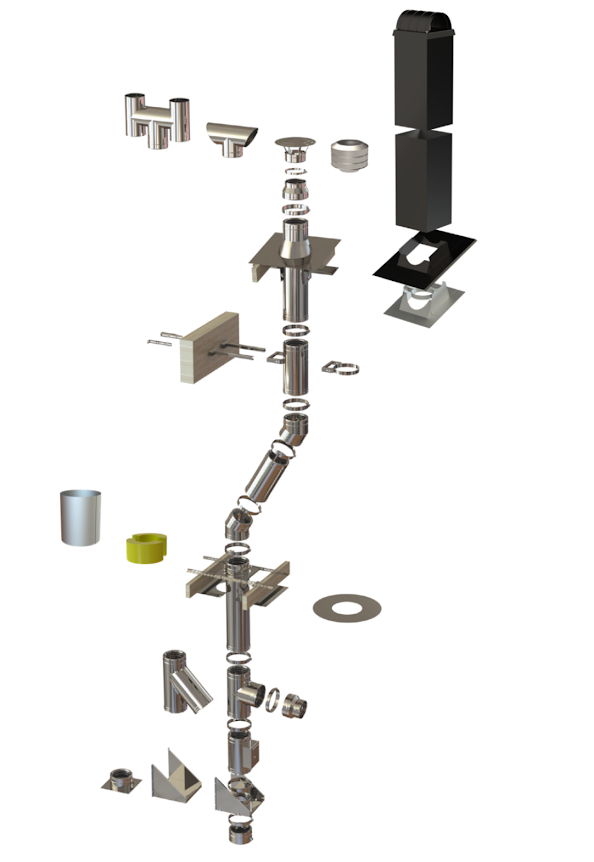
Insulated double-wall chimneys are the backbone of safe and efficient heating in modern homes and commercial spaces. Choosing the right chimney system affects not just how well your fireplace or stove works, but also the longevity and safety of your installation. The big question for many? DW25 or DW50 —which insulated chimney best fits your project. Here’s a clear, simple breakdown to help you decide. For projects requiring a chimney that also supplies combustion air, check out our Triple-wall TW25 explained post.
Why is a properly selected insulated double-wall chimney important for efficiency and safety?
Insulated double-wall chimneys improve heat retention, protect against moisture, and keep your building safer, especially when compared to single-wall or uninsulated flue designs.
Insulation is crucial. It stops heat from escaping, protects your chimney’s steel from corrosive condensation, and reduces fire risks. Double-wall chimneys—where two layers of steel sandwich mineral wool insulation—are the gold standard in Europe for both residential and commercial projects. They work well with solid, gas, and liquid-fueled appliances. The result? Safer, longer-lasting chimney systems and better heating performance for fireplaces, stoves, and boilers.
Installing insulated chimneys also means you comply with building codes like EN 1856-1. That translates to peace of mind and hassle-free approvals. We’ve seen many home builders and renovators turn to double-wall systems when upgrading older homes or adding new fireplaces. The difference in heat efficiency shows up almost immediately.
Key considerations when choosing a chimney
The decision to choose DW25 or DW50 insulated double-wall chimney depends on your insulation needs, the type of project, and local safety requirements. The DW25 is best suited for most standard fireplaces and installation locations, while the DW50 is designed for projects that require thicker insulation, greater heat protection, or have more stringent technical requirements.
Key points:
- DW25 offers 25 mm insulation, making it cost-effective and flexible for most residential and renovation projects.
- DW50 provides 50 mm insulation, giving extra safety and heat retention for extreme or outdoor use.
- Both systems use strong stainless steel, are modular, and meet EN 1856-1 safety and building standards.
- DW25 fits typical fireplaces and indoor heaters, while DW50 suits facades or high-demand appliances such as boilers.
Vilpra Industries Experience and Commitment in Chimney Systems
Vilpra Industries provides reliable, certified chimney systems—that include DW25 and DW50 insulated double-wall chimneys—for both Lithuanian and wider European projects.
At Vilpra Industries, we’ve spent years developing insulated chimneys that meet tough safety and performance standards. Our experience covers hundreds of installations, from new-build homes to tricky renovation projects. Both the DW25 and DW50 chimney systems are designed for seamless integration inside or outside buildings, thanks to high-grade stainless steel and advanced insulation. We constantly update our catalog and work with EU-funded innovations. That means you get proven fireplace chimney solutions, support for modular sets, and expert help from start to finish. See our DW25 system overview and DW50 product page for more choices and accessories.
DW25 Insulated Double-Wall Chimney Overview
DW25 insulated chimneys are best for most indoor fireplace applications, balancing safe, reliable performance with flexible installation options.
DW25 is the workhorse of our chimney systems. It comes with 25 mm thick mineral wool insulation, which is enough to handle typical solid-fuel and gas appliances. The inner tube uses AISI 316L stainless steel with 0.5 mm thickness—perfect for resisting acid and moisture. The outer tube is AISI 304, also rust-proof and durable. Typical diameters range from 80–200 mm and segment lengths (modular sets) like 1 m or 0.5 m cover both simple and complex builds. Many customers use DW25 for classic indoor fireplaces (diameters like 150/200 mm, 180/230 mm, 200/250 mm, in 5 m sets). These are widely available, such as on Veikatex and Termocenter.
DW25 is certified under EN 1856-1 T450-N1 and CE marked, which means compliance with EU safety standards. It resists temperatures up to 600 °C and works well in moist conditions. Fire resistance is strong—these systems are tested for soot fire scenarios and minimum distances from combustibles are clear in the specs. DW25 is flexible: mount it inside, outside, on facades, or through roofs. Typical installation covers a 17°–33° roof pitch.
Warranty on DW25 is 10 years for the internal stainless steel tube. Customers often praise its modularity—you can adapt the installation to almost any layout. That’s why it’s a favorite for renovations as well as new builds.
DW50 Insulated Double-Wall Chimney Overview
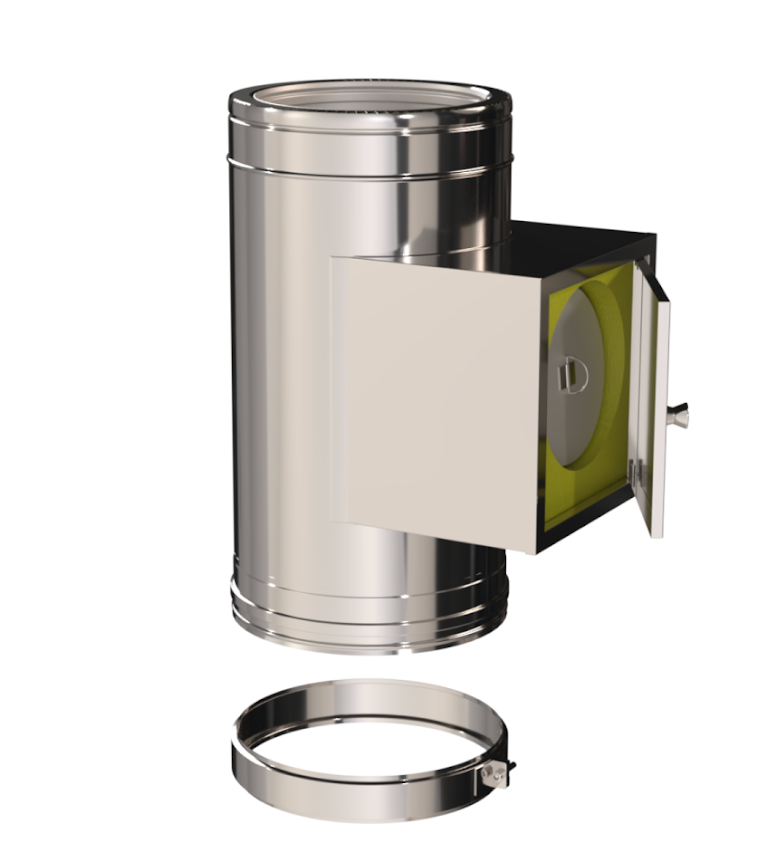
DW50 insulated chimneys are best for demanding projects that require thicker insulation, higher heat protection, or facade mounting.
DW50 is the high-performance sibling to DW25. It features a 50 mm thick insulation—almost double that of DW25—delivering maximum heat retention and safety. Both tubes (inner and outer) are made of robust stainless steel, and segment sizes range up to 700 mm diameter. DW50 handles harsh thermal environments, with operating temps reaching 600 °C, making this system a good pick for installations that need extra protection.
While it’s ideal for high-demand applications—like wood-fired boilers with intense heat, or facade-mounted chimney runs—DW50’s specs also make it a match for projects where building codes call for higher insulation thickness. Installation options are broad: inside, outside, complex layouts, or highly technical projects.
Certification is also EN 1856-1, and clearances from combustibles start at 50 mm, depending on system version. DW50’s modular nature means you can select pre-configured kits or individual segments (see our chimney product catalog). While warranty details are less visible, most systems offer 5–10 years depending on segment.
For customers who need thicker insulation and superior thermal safety—think demanding builds, or places with strict fire codes—DW50 is the smart choice.
DW25 vs DW50 Comparative Breakdown
Answer-first: DW25 is best for normal indoor fireplaces and standard installations; DW50 suits projects needing higher insulation or demanding technical requirements.
| Savybės | DW25 dvisienis dūmtraukis | DW50 dvisienis dūmtraukis |
| Insulation | 25 mm mineral wool | 50 mm mineral wool |
| Materials | AISI 316L (inner), AISI 304 (outer) | Stainless steel (inner/outer) |
| Certification | EN 1856-1 T450-N1, CE Mark | EN 1856-1, CE Mark |
| Operating Temperature | Up to 600 °C | Up to 600 °C |
| Fire Resistance | Soot fire resistant | Soot fire resistant |
| Warranty | 10 years (inner tube) | 5–10 years (check variant) |
| Segment Sizes | 1 m, 0.5 m, e.g., diameters 150/200–250 mm | Up to 700 mm diameter |
| Best For | Indoor fireplaces, renovations, new builds | Facades, high-heat, demanding setups |
| Pricing | €750–€900 (5 m sets, indoor) | Varies (check catalogs) |
| Installation | Flexible, modular, roof pitch 17°–33° | Flexible, modular, more technical |
The DW25 is a versatile solution for double-wall chimney systems. The DW50 is designed for specialized applications—please contact our team for project-specific advice..
How to Choose Between DW25 and DW50 Chimney Systems
A reliable chimney system starts with the right specification. Here’s how we guide our customers:
- Heating appliance type: Gas, wood, or oil heaters all work with DW25 and DW50. High-demand boilers or those requiring thicker insulation may benefit from DW50.
- Location: Indoor installations, standard fireplaces, or renovations? DW25 is almost always enough. Facade runs or outdoor chimneys exposed to extreme cold may need DW50.
- Insulation needs: For normal heat retention and safe operation, DW25’s 25 mm insulation is sufficient. Need maximum thermal protection or want to comply with stricter codes? Choose DW50.
- Building Regulations: Check EN 1856-1 certification in catalog. Always consult local codes, especially for roof pitches, minimum clearance from combustibles, and fire safety ratings.
- Project specifics: Install modular chimney sets tailored to your diameter and length, and ensure compatibility with roof angle and room layout.
If you have any doubts, our technical specialists are ready to help.
A comprehensive guide to choosing double-wall chimneys.
- Identify your heating appliance (fireplace, stove, boiler).
- Decide on insulation thickness (25 mm for standard, 50 mm for demanding).
- Check EN 1856-1 certification matches your safety needs.
- Consult local regulations for installation requirements.
- Choose a modular chimney set (indoor or facade).
- Opt for professional installation.
- Schedule regular maintenance.
If you need further assistance, please contact our “Vilpra Industries” specialists or view our catalogs.


